Location
The Netherlands
Industry
Soil remediation
Catch wear before it becomes failure
Vibration
monitoring detects insufficient lubrication and early bearing damage.
Targeted action
Measurements
show exactly what needs attention.
Maintenance you can plan and budget for
A detailed vibration report gives the maintenance team a clear, fact-based basis to schedule interventions.
Challenge
At a soil remediation site in the Netherlands, the customer operated a pump that needed to transfer process fluid at temperatures up to 90°C. Under these conditions, the pump suffered from recurring cavitation.
Inspection showed three root causes:
- the impeller design created deep local low‑pressure zones,
- restrictions in the suction line increased pressure drops before the pump,
- the high temperature of the slurry further intensified cavitation, as the increased vapour pressure made it easier for vapour bubbles to form and collapse, damaging the wet-end parts.
The result: frequent cavitation, rapid wear, and increasingly unstable operation.
Solution
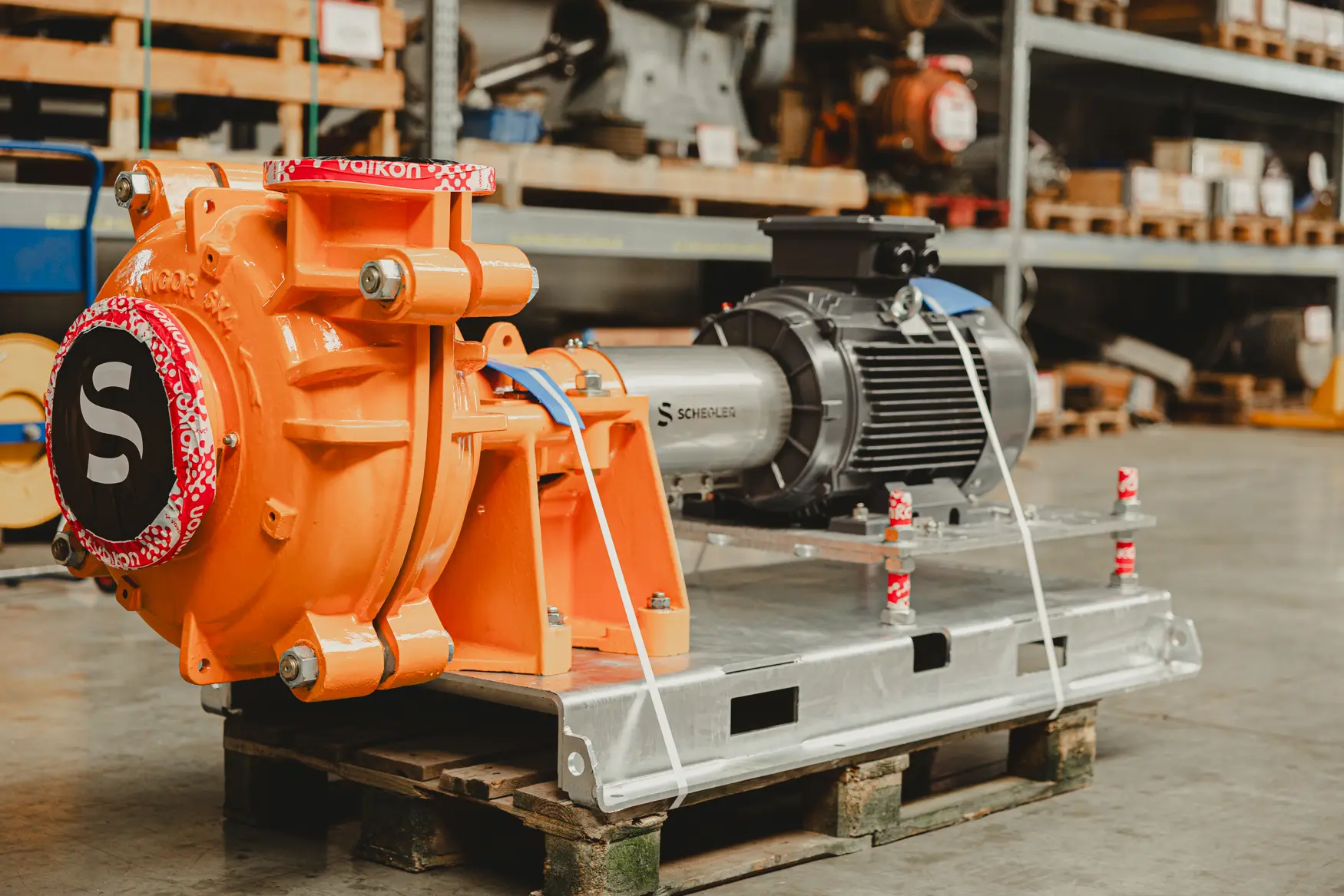
Vaikon replaced the failing unit with a Schegler Vigor 6x4 slurry pump, equipped with a 6‑vane closed high‑efficiency impeller specifically chosen for its lower cavitation sensitivity.
Why the 6‑vane impeller solved the issue
In this specific situation, having fewer vanes meant that each vane had to generate a higher pressure rise, creating deep pressure dips on the back of the blade and increasing the likelihood of cavitation.
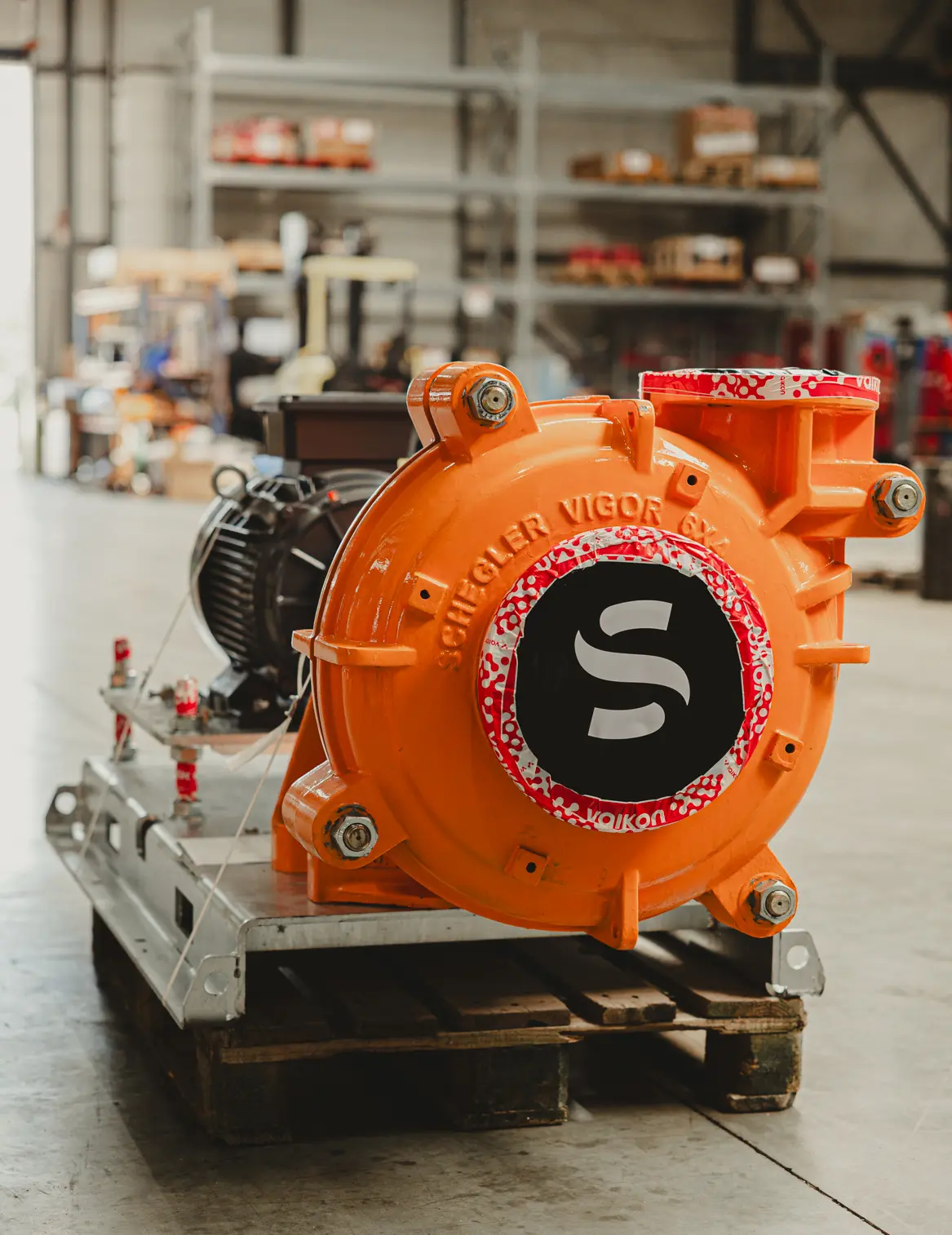
With six vanes, the hydraulic load is distributed over a larger surface area, reducing the pressure gradient per vane and limiting the formation of ultra-low-pressure zones where vapour bubbles can form. This results in a more stable pressure field inside the pump and significantly reduced cavitation risk.
Optimising the suction line
The original installation used valves that partially obstructed the flow when open. Even those small obstructions reduce the available Net Positive Suction Head (NPSHa), which is particularly critical at higher temperatures. To eliminate these restrictions, we replaced them with Krux knife gate valves. When open, a Krux valve provides a true full‑bore opening, protecting the suction line from unnecessary pressure loss. The natural‑rubber sleeves of the valve, shield the internals from abrasive wear, helping extend service life even in abrasive slurry conditions. And when the valve closes, the gate pushes solids out of the sleeve, preventing build‑up.
Sealing upgrade
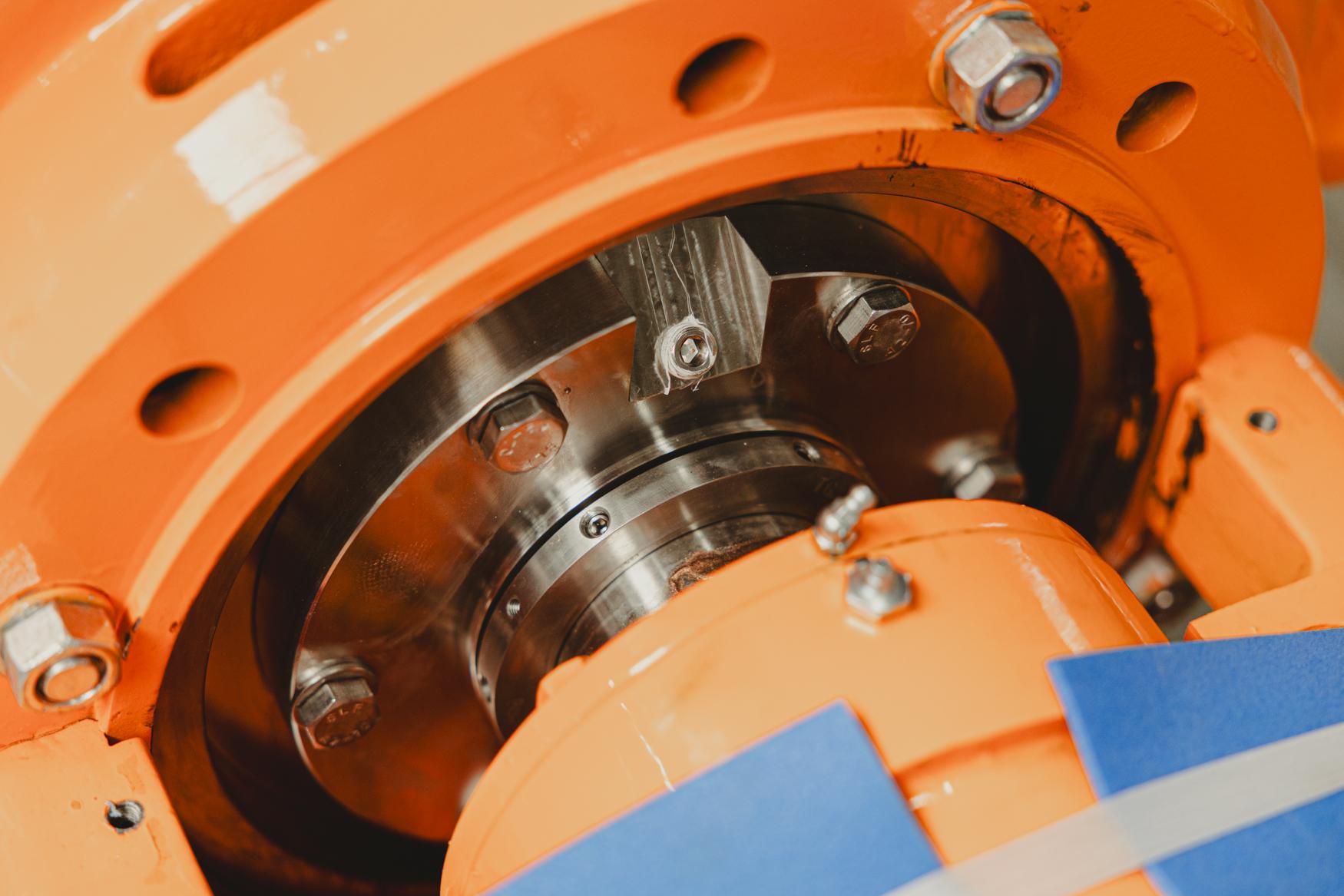
To ensure reliability under fluctuating suction conditions, the new pump was fitted with a Brayston single mechanical seal, offering stable sealing performance with hot slurries.
Result
The combination of a properly selected impeller, an unrestricted suction line and a robust sealing system has prevented the failure pattern from recurring. This highlights the importance of correct component selection: every application is different, and performance depends on matching the right equipment to the specific conditions. Vaikon supports this process through its engineering expertise, ensuring that each solution is tailored to the application.
The customer’s site now benefits from:
- A setup that limits cavitation risk and keeps pump performance stable at higher temperatures
- Reduced wear on wet-end parts
- Lower maintenance frequency and improved uptime
- Reliable flow control thanks to Krux full‑bore knife valves
By addressing both the pump’s internal hydraulics and the suction line, Vaikon removed the cavitation-inducing factors, solving a persistent reliability issue and ensuring stable operation.