Location
Belgium
Industry
Soil remediation
High suction static head breaks standard seals
When a pump sits beneath a tall column of heavy slurry, the pressure forces slurry past conventional gland seals, causing repeated leakage and failure.
No sealing water, no compromise
The dry gland seal (SX) uses hard-on-hard mechanical faces instead of a water barrier, reliable sealing without depending on external water supply or flow balance.
From recurring failures to planned maintenance
Eliminating the root cause stopped the failure cycle entirely, giving the maintenance team a predictable schedule instead of reactive repairs.
Challenge
At a soil remediation plant in Belgium, contaminated water is fed into a thickener where solids settle to the bottom. The concentrated slurry or the thickener underflow is then pumped to a filter press to be dewatered into a solid cake for further processing or disposal.
It sounds straightforward. But the pump handling that underflow sits directly beneath a tall column of heavy slurry. That creates a high suction static head: the weight of the fluid above the pump pushes down on the seal, forcing slurry into areas it shouldn't reach.
The existing pump couldn't handle it. The seal failed repeatedly, leading to leakage, unplanned stops and ongoing maintenance costs. Every failure meant downtime in a process that couldn't afford it.
Solution
The root cause was clear: the used seal wasn’t built for the high suction static head conditions in this specific situation. Water-lubricated gland seals depend on a controlled water flow to keep slurry out, but under high head, that balance breaks down. The slurry wins.
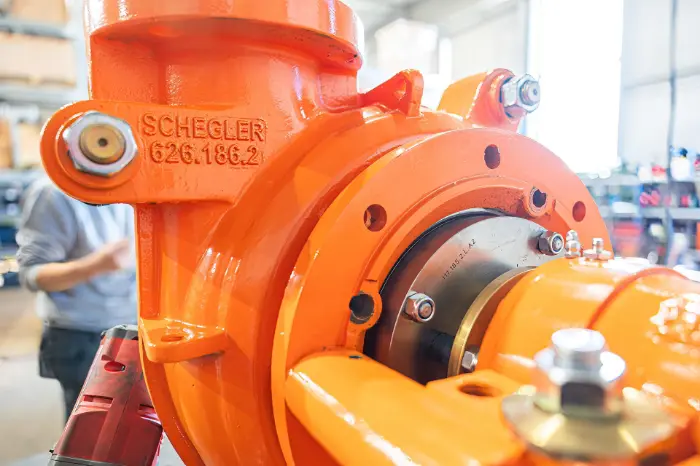
Vaikon replaced the failing pump with a Schegler Vigor slurry pump fitted with a dry gland seal (SX). This sealing solution was developed in-house by Vaikon, specifically for situations where external sealing water is impractical or where process conditions make a standard gland packing seal unreliable
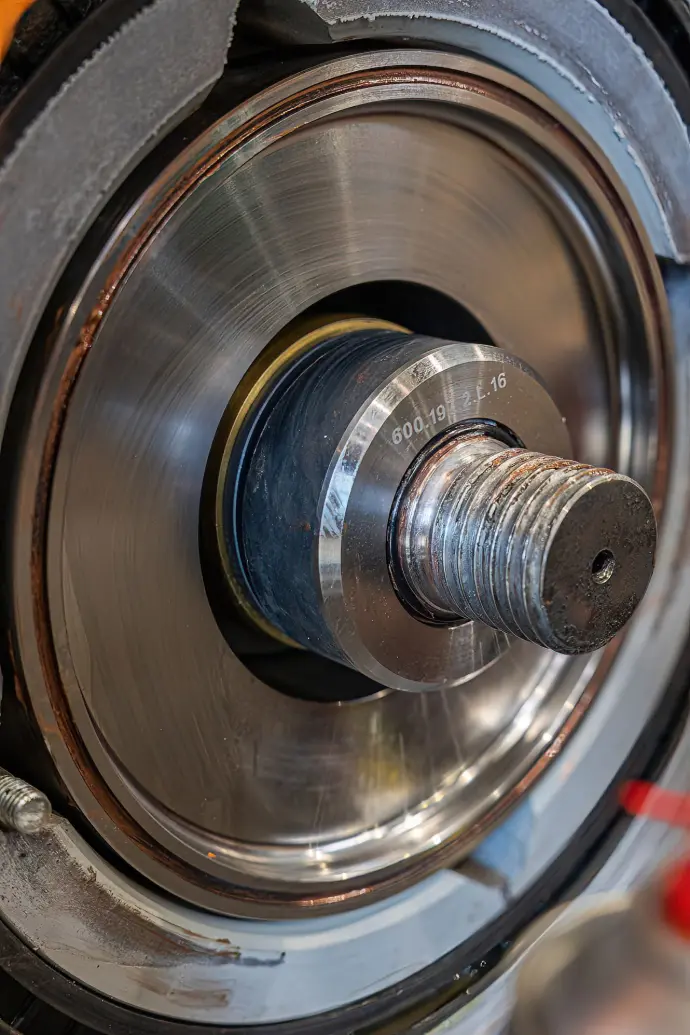
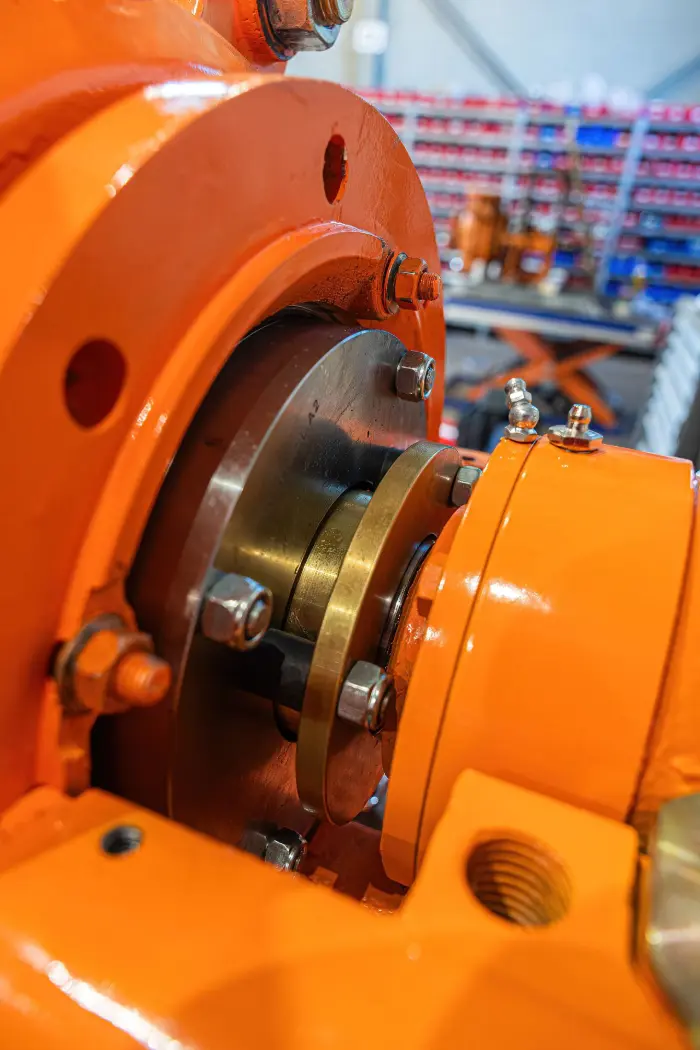
The dry gland seal works without sealing water. Instead, it uses precision-fitted hard on-hard faces that form a tight mechanical barrier against slurry intrusion.
Axial compression keeps constant contact between the face seal and wearing face, maintaining sealing integrity even under fluctuating suction conditions and high static head.
There are no water connections to manage,
no flow balance to maintain. The seal either
works or it doesn't and with the right
materials and correct installation, it works
reliably.
Result
Since the Schegler pump with dry gland seal was installed, the recurring failure pattern has stopped. The plant can run its thickener underflow circuit without seal leakage interrupting the process.
For the maintenance team, the change is just as significant. Instead of responding to repeated seal failures, they now work on a planned schedule. Less reactive intervention, more predictable uptime.
The dry gland seal also eliminates the need for a sealing water supply at the pump, a meaningful bonus because water is a precious resource and every litre saved translates directly into cost savings.