Pushing 550 tonnes of sand and gravel per hour through 3.5 km of pipeline
Our client needed to relocate their sand processing plant. The mined material now had to travel a much longer distance, which posed real hydraulic challenges: increased friction, greater pressure loss, and the risk of material settling in the line.
We modelled the full system upfront. Then we designed, built, and installed two custom Schegler Bolt booster stations to bridge that extra distance.
- Turnkey, containerised booster units
- Each with its own 12x10 Schegler Bolt slurry pump, frequency drive, sensors and climate control
- Positioned to distribute pressure and keep the slurry moving
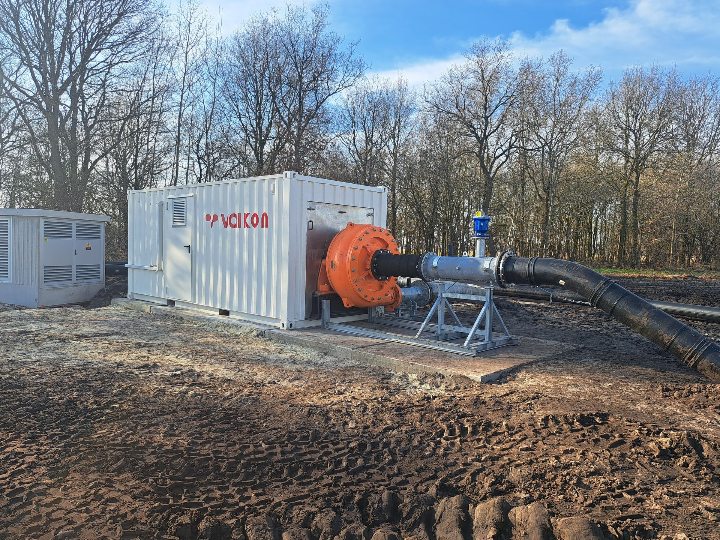
After installation, we compared our theoretical model against live measurement data. The upfront calculations proved close to reality, with deviations within expected tolerances. Confirming that our model is a reliable foundation for the final design.
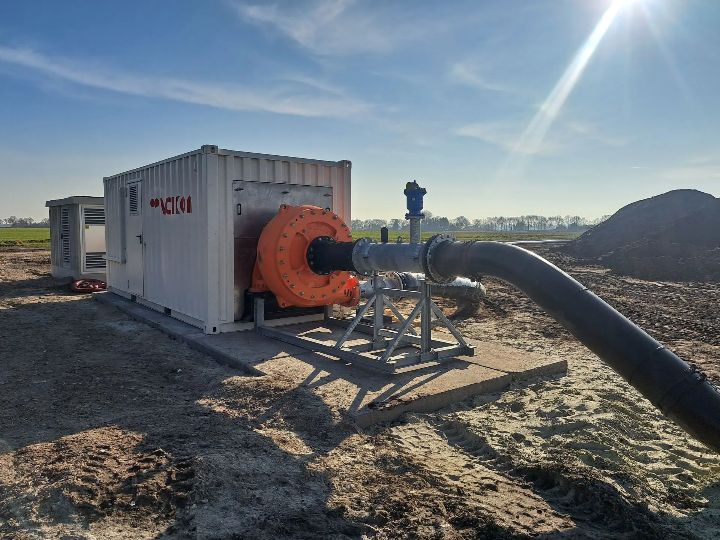
In this white paper, we walk you through the hydraulic theory, the system design, the instrumentation, and the comparison between prediction and practice. Open and detailed.
Interested to know more?
Enter your details below to request a digital copy.